The Tech Conference That Wasn't Selling Anything: My Key Takeaways from Flower City AI
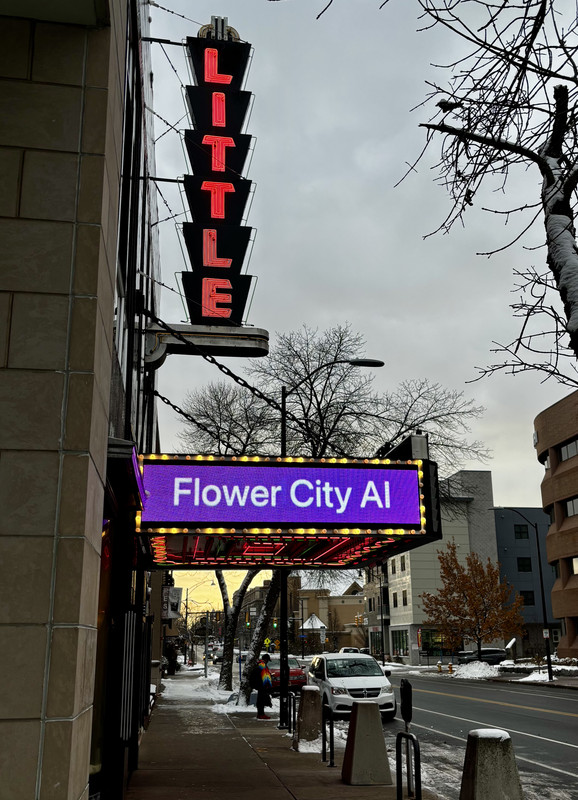
I realized this was a true community effort—unlike many conferences where talks revolve around a developer advocate pitching a product to hit team MRRs or KPIs, this event was simply about people, both in and out of tech, genuinely curious about the future of artificial intelligence.
1. Community and 10-Year Predictions 🔮
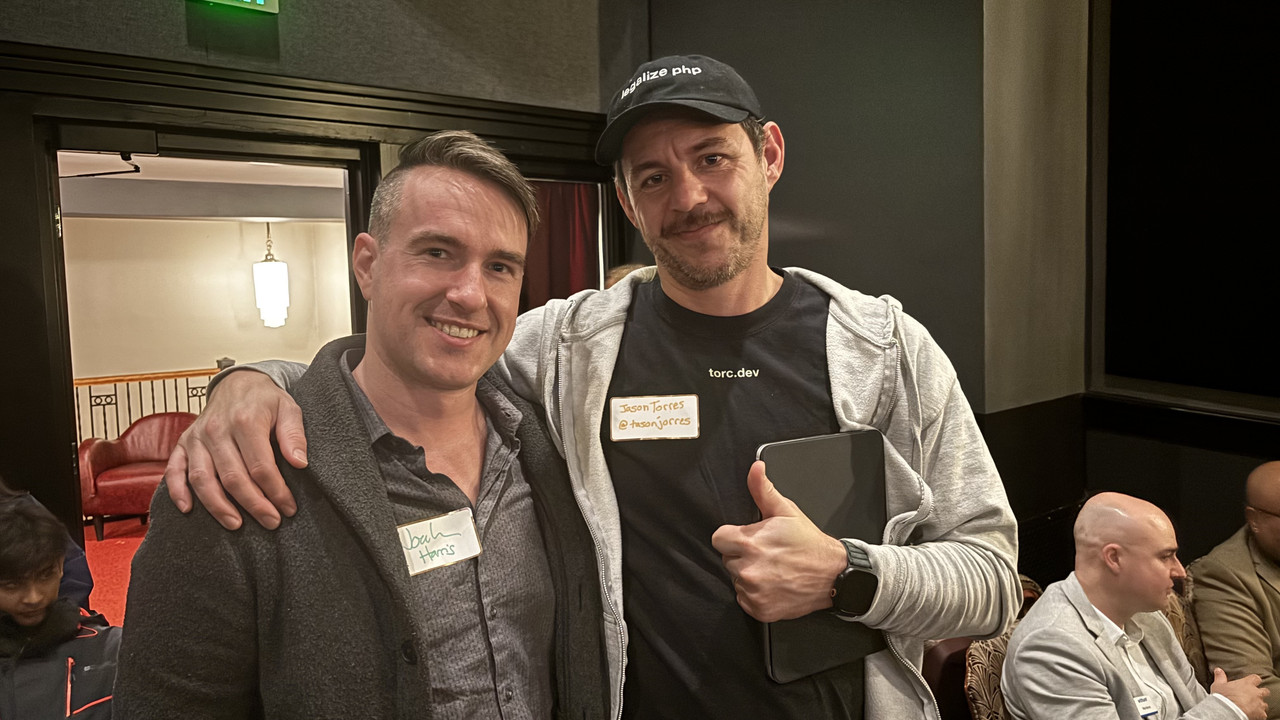
The opening keynote, delivered by event founder and organizer Max Irwin (Max Irwin), reflected on the community's evolution: from Year 1 (basic education) to the current Year 3 theme of societal impact. Max emphasized the event thrives on community inertia, not advertising, a point proven by how I received my ticket from my friend N. Harris.
Max Irwin's 10-Year Forecast:
- Economic Shift: A huge resurgence in the trades and domestic manufacturing as younger generations pivot away from desk work.
- Ad Tech Struggles: The digital advertising economy is struggling, with search summaries causing click-through rates on ads and search results to drop by as much as 50%.
- New Services: Expect fully personalized education, AI-powered personal advocates, and new digital therapies.
- Legal Battles: The New York Times vs. OpenAI lawsuit may last 20 years.
2. Generative AI in Healthcare: The In-House Advantage 🩺
Carly Hochreiter from URMC shared their strategy for developing generative AI tools in-house, highlighting cost and customization benefits over vendor solutions.
Pre Chart Pro Tool & Pilot Results:
The tool targets pre-charting, where providers spend ~1/3 of their EHR time. It uses 9 clinical data streams and a hybrid LLM approach (GPT-4/4O, temperature=0).
Usability:       81%   # Rated easy to navigate
Helpfulness:     63%   # Highest benefit for complex patients
Time Savings:    63%   # Reported reduction in EHR time
Risk Reduction:  50%   # Reduced risk of missing information
3. Innovation and Infrastructure: The Rochester AI Hub Initiative 🚀
This talk provided a concrete local mandate: the Rochester AI Hub Initiative, aiming to make Rochester a top 5 global AI hub.
Total Funding Target:       $100M
Local Companies Involved:    80+
National Partners:           12
Infrastructure Goal:         Top 5 Global AI Hub
Focus Areas:                 Talent Pipeline, GPU Access, Research, Startups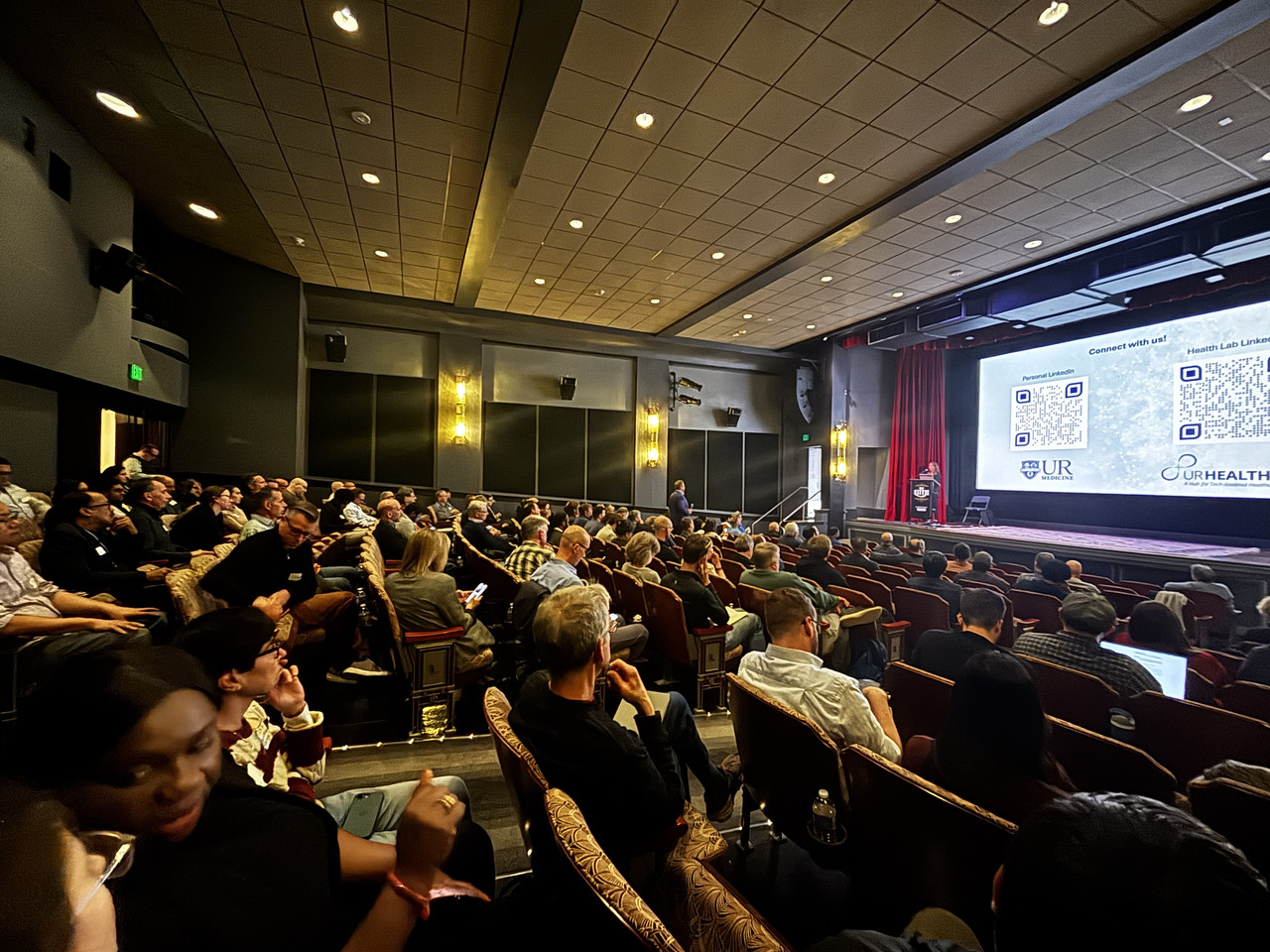
4. The Data on Sustainable AI Usage ♻️
This crucial session on the environmental impact of AI was delivered by Madhura Anand (Madhura Anand), a data professional with the City of Rochester focused on policy and sustainability.
The Problem: Inference is the Energy Monster
Inference Dominates:  70% to 80% of model's total energy consumption
Energy Scale:         ChatGPT-4 model for one year needs ~441,000 megawatts
                      (enough power for 35,000 homes)
Inefficiency:         Response length biggest factor (85% correlation)
                      Large models waste 10-30x more energy for simple tasks
Solutions: Individual and Systemic
- Individual Action: Set max token limits (e.g., 200-300 tokens), choose smaller models, and stop prompts immediately.
- Systemic Change: Hardware fixes needed for GPU chips wasting 40% to 60% energy. Policy must require standardized, auditable disclosure of energy, carbon, and water usage.
Conclusion
The Flower City AI event successfully framed the technology not just as a fascinating tool for personal and societal advancement, but as a critical responsibility.
I realized this was a true community effort—unlike many conferences where talks revolve around a developer advocate pitching a product to hit team MRRs or KPIs, this event was simply about people, both in and out of tech, genuinely curious about the future of artificial intelligence.
We stand at a crossroads where we must navigate the "fascinating and terrifying" future by actively participating in its design.
Jason Torres © 2026. All rights reserved.